
Queer Death Salon is a virtual community space for all 2SLGBTQIA+ people to come together to discuss death, dying and grief.
It is a facilitated drop-in discussion space, with the purpose of building connection, skill, and resources for 2SLGBTQIA+ people navigating end of life in our personal lives and in our communities.
Attendees are welcome to come with questions, stories, or special objects to share with the group.
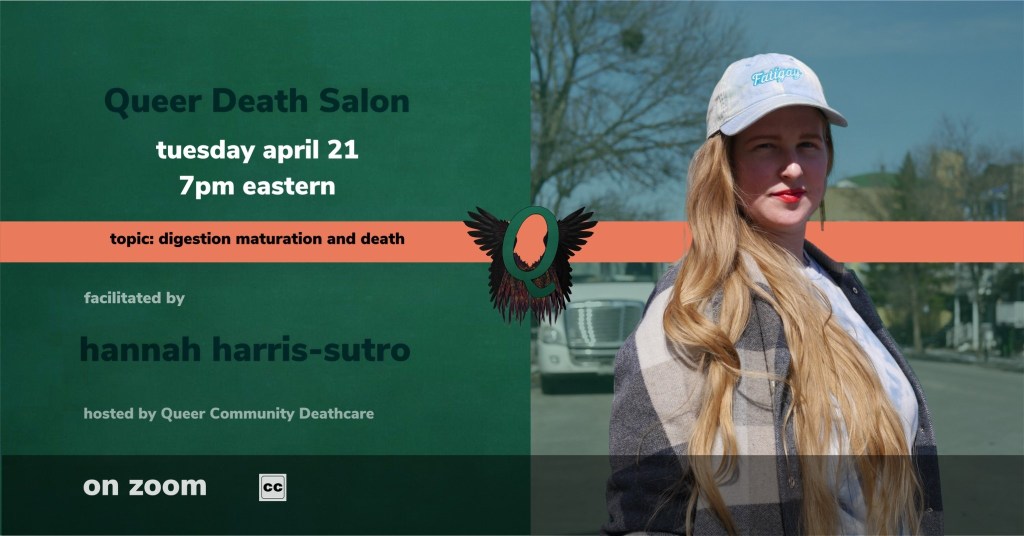
digestion maturation and death
Tuesday April 21 at 7 p.m. EST
come try on a lens through which we see death as a natural part of cyclical human maturation, and digestion of experience as an ongoing, mundane yet essential practice of being with death.
we will work with individual somatic practices to support digestion & completion, helping us to root in reality & reduce the suffering we create & exacerbate through attaching to fantasy rather than engaging what actually is.
paradoxically, circling closer to death as a mundane process that constantly occurs normalizes change & transformation as constants & reduces our anxiety about the big death that ends this incarnation of life, liberating our Aliveness towards more pleasure & power.
our pleasure & power are essential for surviving despair & resisting rising fascism.
hannah is a somatics practitioner, bodyworker & facilitator who roots her work in the unshakeable knowing that the wisdom of your body is your birthright, and that this wisdom is the heart of transformation & healing for personal & collective liberation.
she is also a white settler of celtic isles & german jewish & gentile descent, a parent, a leatherdyke, and a mad femme who’s had a close personal relationship with suicidality since childhood & who is purposefully committed to life. her approach is grounded in somatic experiencing, biodynamic craniosacral work, land-based ancestral reconnection, mad pride/disability justice, peer education & support, and queer cultural lineages of radical desire, consent & power.
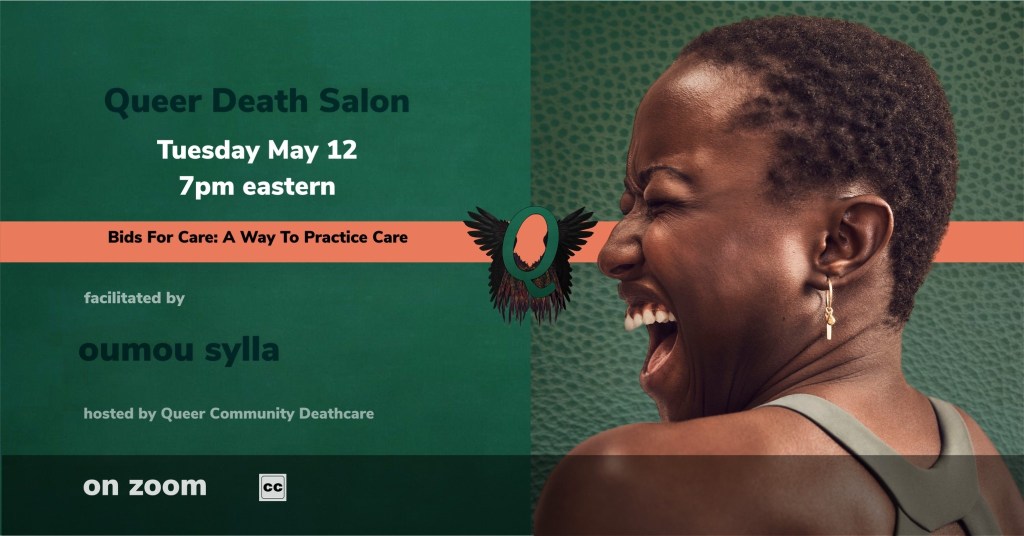
Bids for Care:
A Way to Practice Care
Tuesday May 12 at 7 p.m. EST
In this interactive workshop, participants will explore and practice the concept of “Bid for Care” as a foundational element for building responsive and supportive communities. Drawing on principles of radical mental health and community care, participants will learn practical strategies for recognizing bids for care, assessing personal capacity to respond, and cultivating a culture of mutual support.
This workshop is for you – yes, YOU!
It’s for you if you want to explore how to give, receive, and co-create care in ways that feel imaginative, expansive, and aligned with your values. It’s for you if you’ve ever felt unsure about practicing care with strangers. And it’s for you if you value spaces where participants are honored as wisdom keepers, teachers, and storytellers.
Participants May Need:
– Paper and pen/pencil to write / archive care plan
– Space to use iPad, phone, or other tech to archive care plan
oumou is a Senegalese-Guinean, multi-hyphenate polycreative – therapist(ish), coach, disruptor, zinester, writer, speaker, consultant and facilitator of spaces for radical learning. oumou is a two-time graduate of Syracuse University and a former adjunct professor at the same school. she is the creator of RMHFA, a workshop that is slowly but surely changing the care and mental health landscape.
Check out their patreon, instagram, and zines
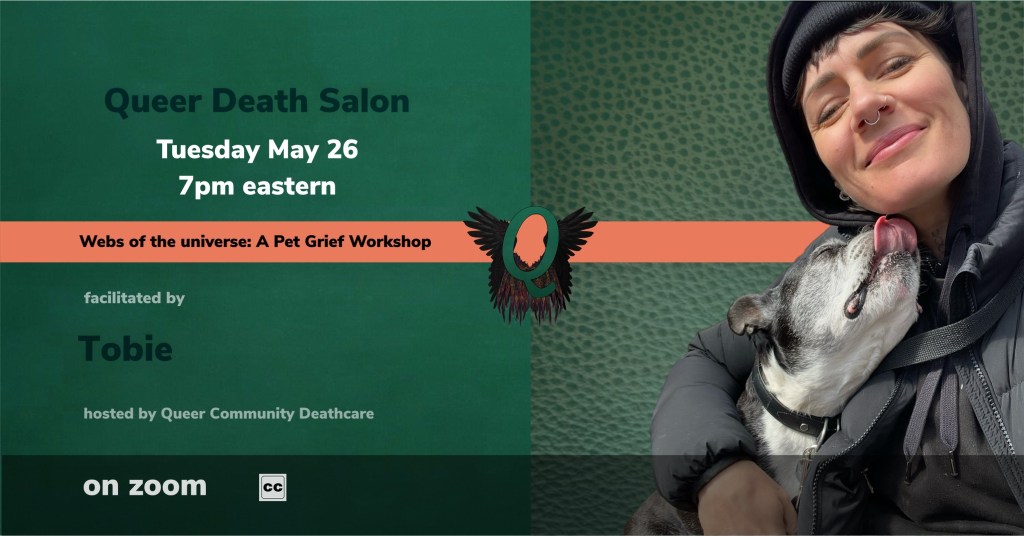
Webs of the universe:
A Pet Grief Workshop
Tuesday May 26 at 7 p.m. EST
Pet loss is so deeply unique. They are woven into the smallest crevices of our lives, a steady presence through everything. We orient around them, a symbiosis that words cannot describe. Bringing us safety, adventure, companionship and support, their death is profoundly impactful on our existence.
With your pet depicted at the center, participants are asked to draw the universe of webs showing the experiences, support and feelings your pet brought into your lives. We will then move to the present moment, imagining what we can access today to continue their memory. What new webs can be built? How can you continue to honor their life? How would they want you to live? Attendees will then break into smaller groups to share their grief and imaginings together.
This workshop is in memory of Tobie’s soul dog, Peach (Petey)
July 2009- to June 2025
All facilitator proceeds from this Queer Death Salon will be donated to Boston Terrier Rescue Canada, Sameer Project, and Queer Mutual Aid Lebanon
Participants are encouraged to bring paper, pens/markers and any other art supplies they wish to use.
Tobie (they/them/iel) is a white settler located in Tio’tia:ke (Montreal). They are a disabled coach, facilitator, weaver, builder, caregiver and disruptor with mutual aid, animals, the outdoors and art at the center of their life. Tobie has never not had a dog and other pets from the day they were born, they are the main thread through their life.
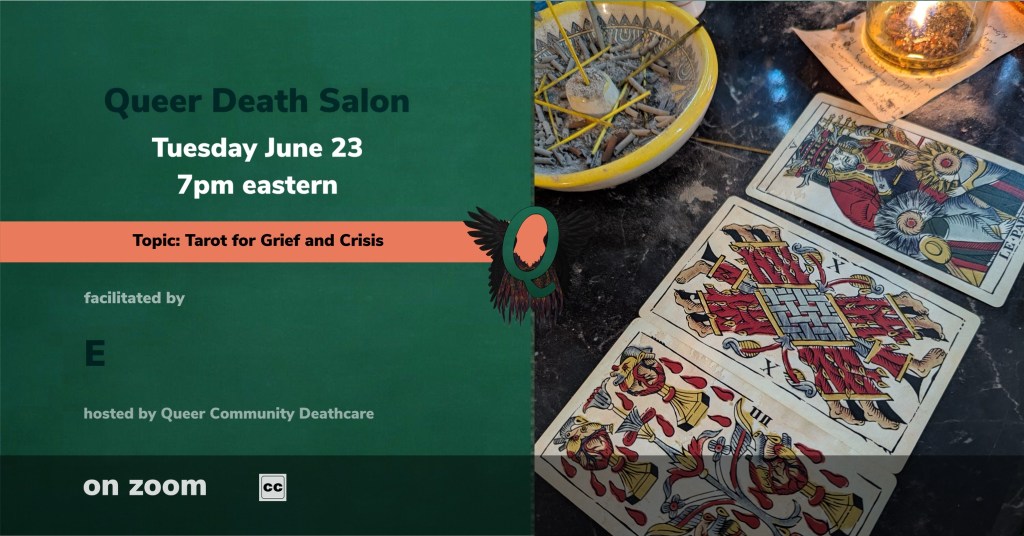
Tarot for Grief and Crisis
Tuesday June 23 at 7 p.m. EST
Participants will be led through Jungian, Hermetic, and Rider-Waite tarot traditions and what it means to read in different modalities, especially in times of grief or crisis.
We will explore the 7 Card Grief Spread by Emerald Lotus, Death Tarot Spread by Tina Gong, and a simple 3 Card Spread
Paticipants are encouraged to bring their own cards, favourite spreads, and questions
E (she/her/they/them), is a largely self-taught tarot reader of about 17 years. They primarily approach their reads from a Jungian or Archetypal standpoint, inviting people to explore the cards from a deeper psychological standpoint. She has also branched into other forms of cartomancy (lenormand, playing cards) and is a budding astrologer. They are also an author, cat owner, local community organizer, and hobby collector.
Speaking of hobby collecting, her links can be found here.
CLICK HERE TO REGISTER FOR UPCOMING QUEER DEATH SALONS
Participants are encouraged to bring their own questions, stories, and complexities to share.
As always, I’m interested in having meaningful discussion groups that engage participants. If there is a question, theme, topic, or guest speaker you are interested in, please take a moment to fill in this anonymous suggestion form. You can submit as many ideas as you like.
Setting and Access:
Queer Death Salons take place monthly, online over Zoom on Tuesday evenings at 7p.m. (Eastern Time) and are regularly attended by participants from all over the world. They are hosted in English with captions available and last about 90 minutes. Attendees are welcome to participate to their level of comfort. This means cameras can be on or off, people can unmute to speak, raise their hand to be called on, participate through chat, or simply listen in after the intro portion. Queer Death Salons are not recorded.
Pay What You Can:
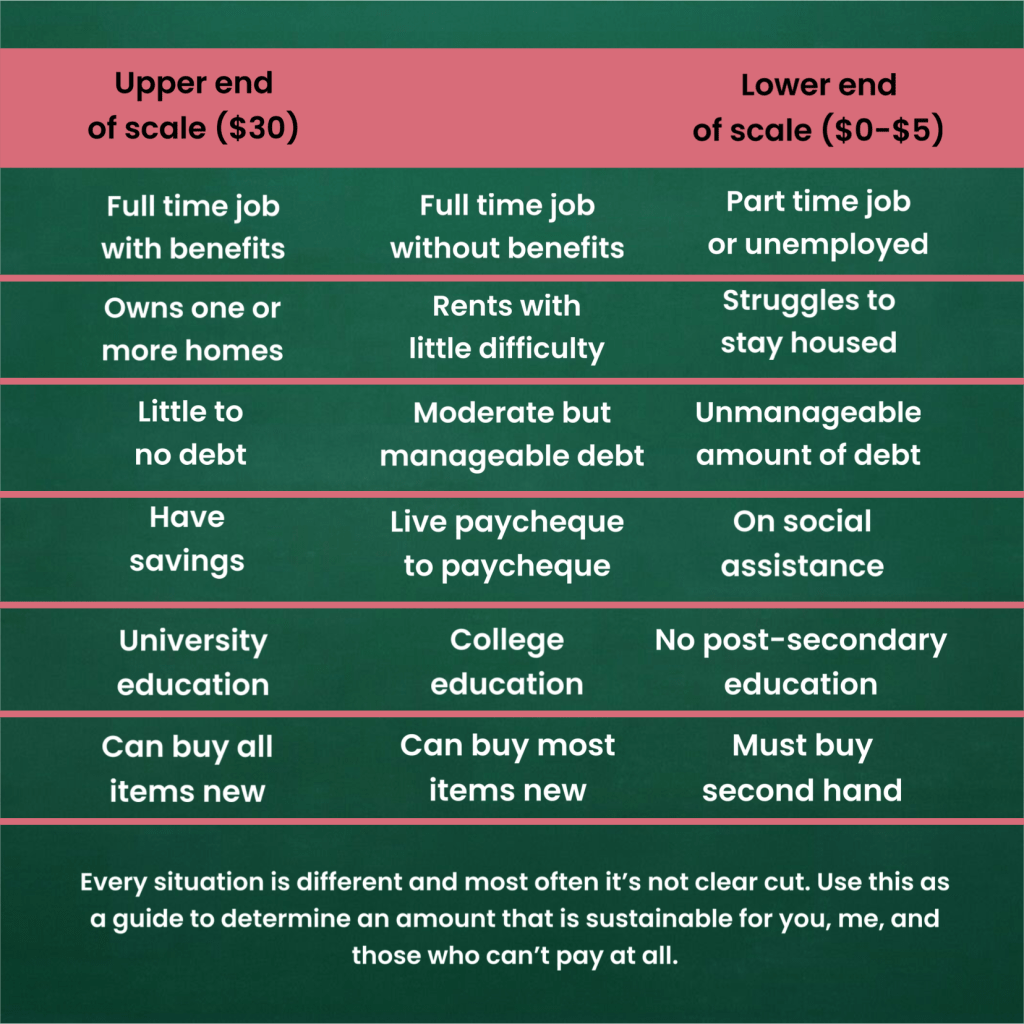
The suggested donation is $30 and you’re encouraged to select a price that’s accessible to you, including $0. No one will be turned away for lack of funds. By paying the highest amount that you’re able, you make it possible for others with less access to resources to join this event.
Agreements for participation:
This is a space where we intentionally come together to discuss all aspects about death, dying, and grief. Global events, personal histories, and intimate details of our lives may come up and may bring up strong emotions. Participants are encouraged to do what they need for themselves in these situations.
Racism, homophobia, xenophobia, transphobia, antisemitism, islamophobia, ableism, and any other form of prejudice against a person or way of life will not be tolerated. Anyone engaging in prejudice towards another group member will be subject to immediate removal.
We are curious, open, and respectful – We assume good will, ask questions, and allow space for different experiences and points of view
We take care of ourselves – We stretch, take a break, eat, mute for a bit, drink, use restroom, connect with a friend, rest, call it a night, etc. as needed for our own well-being as individuals.
We keep confidentiality – We speak from personal experience and take home learnings while taking care not to identify anyone other than oneself. If we want to follow up with anyone regarding something they said during a session, we ask first and respect their wishes.
We use inclusive language – We speak using plain language and ask clarifying questions when we aren’t sure what someone means. We make effort to use gender-neutral language as appropriate.
We are all here because we want and choose to be here – We are free to leave at any time, for any reason.
 Queer Community Deathcare